EN
EN



Design Elements that Increase Collaboration
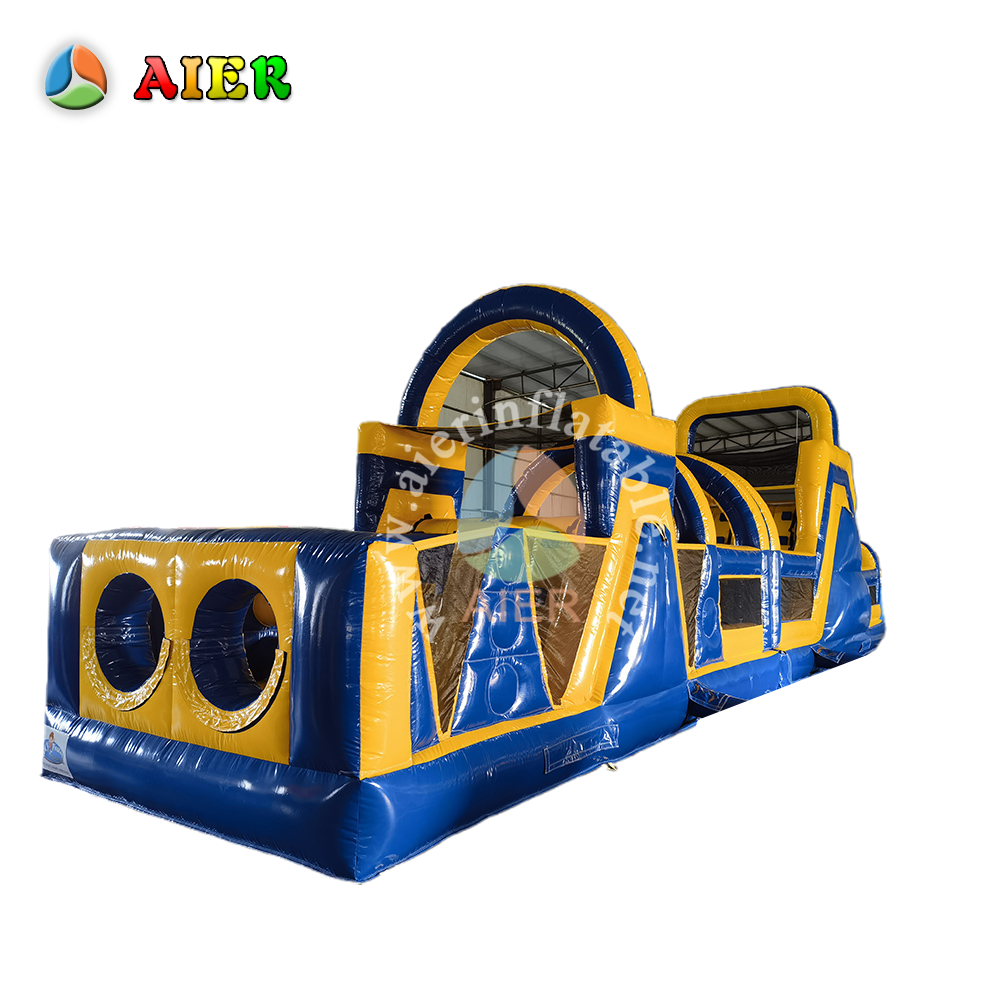
Fluid Surfaces and Moving Parts Demand On-The-Spot Communication
Inflatable obstacle courses include a number of animated components, such as shifting platforms, swaying bridges, and unreliable footing. As participants enter these obstacles, they must continuously communicate about what is happening and what is about to happen. “Left foot now!” is a common command during the navigation of these obstacles. People often grab each other to maintain balance or protect each other from falling, and everyone must coordinate with each other. These obstacles facilitate the creation of interpersonal trust, as the competitors must rely on one another to make it successfully through obstacles to avoid crashing or falling. Regular team building activities do not offer the same opportunities, as they do not demand spur-of-the-moment collaboration. Most team building activities offer predictable obstacles and situations, making it easy for participants to prepare and execute a plan. In contrast, shifting, inflatable obstacles require participants to keep their heads up, pay attention, and communicate effectively.
Synchronized Movement Requires Clear Roles, Trust, and Flexible Leadership
It is common for organized role assignments and leadership to emerge during events such as dual lane tunnels and partner balance beams. Some people focus on keeping everyone in sync, while others execute the movements, leading to ad-hoc hierarchies based on the group’s expertise. Trust is developed through reliance on one’s partner’s balance, or on their grip strength. It is particularly interesting, and perhaps ironic, that 2023 studies have found that teams who physically worked together to overcome challenges made decisions 40% faster during their subsequent work projects. It’s no wonder, as working through physical challenges side by side creates that connection.
Communication and Problem Solving Under Stress
Verbal and Nonverbal Communication in High-Stakes, Time-Pressured Situations
Good coordination tends to be hindered in scenarios where there is intense and chaotic visual stimulation - like moving floors, roaring fans, floors shifting, and changing colors. In such scenarios, short, cryptic verbal commands and precise gestures and body language become essential. As noted in literature focusing on team behavior research, teams that employ basic signaling and nonverbal communication complete their objectives roughly 40% faster than teams that rely on verbal communication most of the time. This behavior builds trust as most people learn to respond quickly to observe the subtle cues like the shift of someone’s body position, eye focus, and posture to anticipate the next action from their peers. Not limited to the scenario, these skills are extremely useful in the real world where emergencies are to be handled, and multiple teams need to be integrated smoothly.
Iterative Strategy Development Across Sequential Challenges (Tunnels – Walls – Balance Beams)
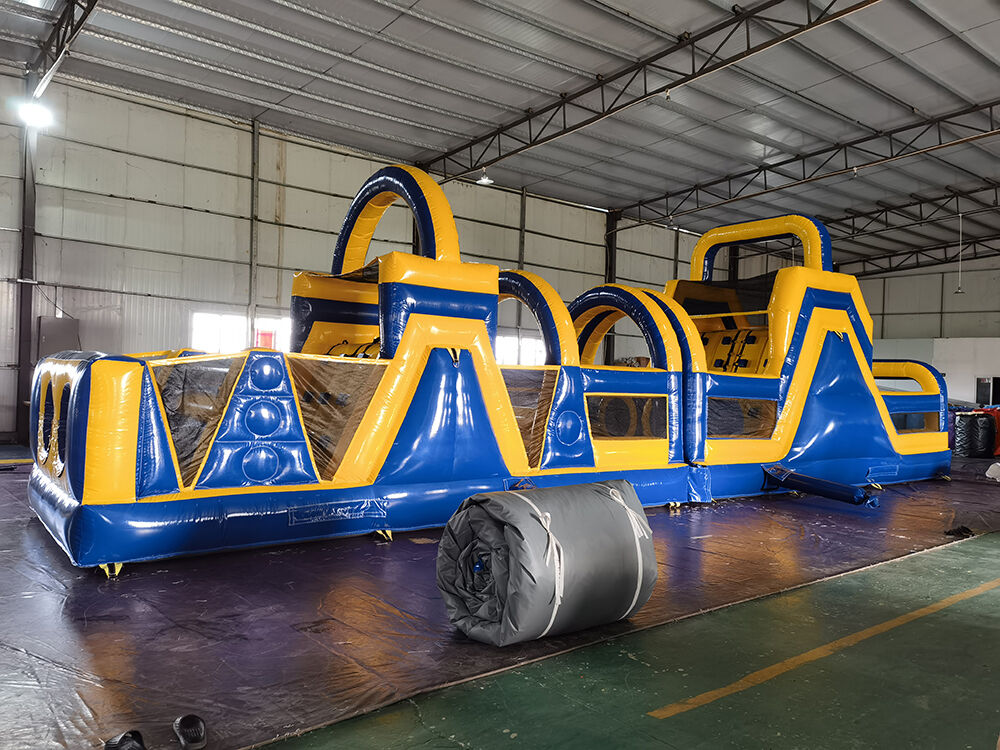
When dealing with multiple challenges in succession, groups tend to develop strategies on the fly. After getting stuck in the crawl space, team members tend to pause, reassess, and define roles. For example, one person may be designated to ensure everyone continues moving, while another may be focused on keeping the wall step supporter stable. On balance beams, people automatically make changes to step in unison and adjust their position to maintain balance. All of these people-adjustments demonstrate their thinking and strategies are progressing. Studies on group behavior show that teams displaying this type of behavior tend to do 58 percent better on subsequent adaptability studies. It seems that physical challenges improve mental adaptability and that skill transfers to workplace problem solving.
Tangible Outcomes of Team Building in a Corporate Environment
73% Increase in Collaboration Metrics After Event: 2023 EventTrack Survey
From the 2023 EventTrack Survey, companies that included inflatable obstacle courses had teams that worked better together after the event when compared to those that just conducted events with standard workshops, with a 73% increase. Physical activities provide a quick route for teams to align and take action, simulating work scenarios where poor collaboration can lead to loss of profit. It is also easier to identify the outcome of an event when team activities shift from brainstorming to actual doing, as in the survey where team members who agreed to set their own rules for communication while crawling through an inflatable tunnel had 50% fewer conflicts in subsequent work assignments. Remarkably, 68% of those participants still recalled and practiced those leadership skills six months later. The obstacle course is inclusive to all fitness levels and won’t hold back teams from pulling others. This also helps teams bond without the risk of skill gaps.
Designing for Inclusivity and Adjustability for Strategic Use of Inflatable Obstacle Course
Inflatable obstacle courses are perfect for team-building sessions as they offer limitless design possibilities for different challenges. Examples include varying heights of climbing walls, sensory friendly zones, and balance beams. These designs are suitable for teams with varying mobility and cognitive needs, and versatility is emphasized. Facilitators are encouraged to customize their sessions, meaning that they can remove or change different obstacles and they can change the balance beams for whatever their team is working towards, the amount of time they have, or whatever skills they are trying to develop. Essentially, every inflatable obstacle course is a massive playground for all participants, regardless of their physical and cognitive challenges, to work together and have fun. These inflatables provide unique challenges for participants, and build trust as the participants problem solve together.
Frequently asked questions
What are inflatable obstacle courses?
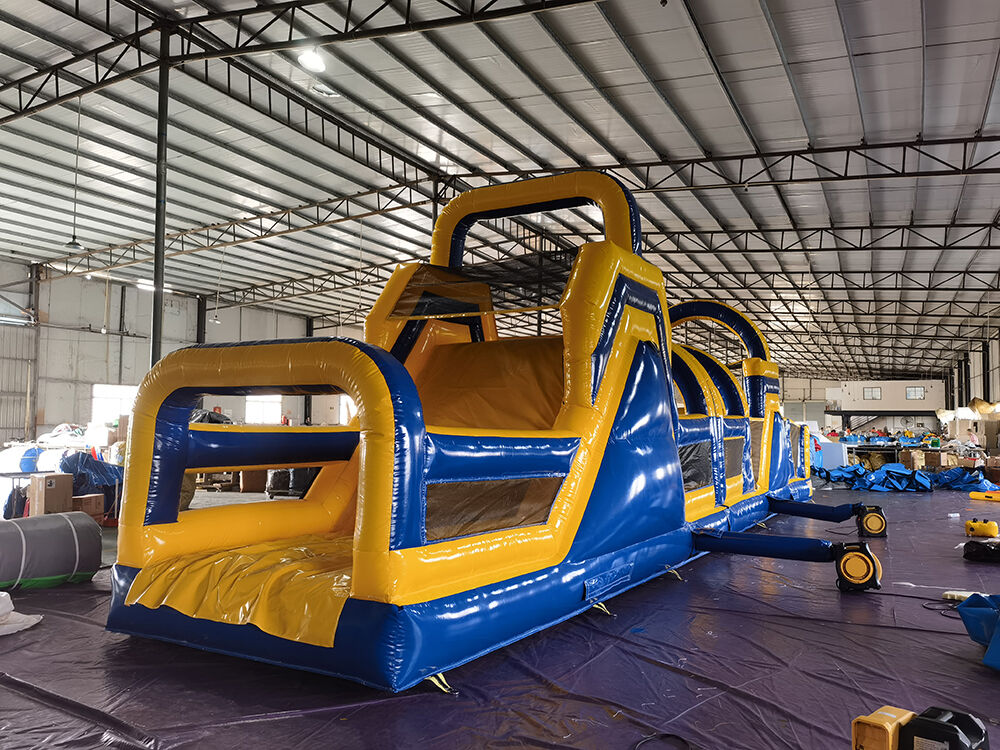
Inflatable obstacle courses are team-building structures that are made of inflatables and can be arranged to create physical challenges that encourage teamwork and coordination.
How do inflatable obstacle courses build a team?
They build trust and communication by design, as teams have to problem-solve, create working strategies, and assign roles to team members.
Are inflatable obstacle courses inclusive?
Definitely. They include features that can be changed to include those with different abilities, fitness levels, and neurodivergent challenges, ensuring everyone can participate equally.