EN
EN



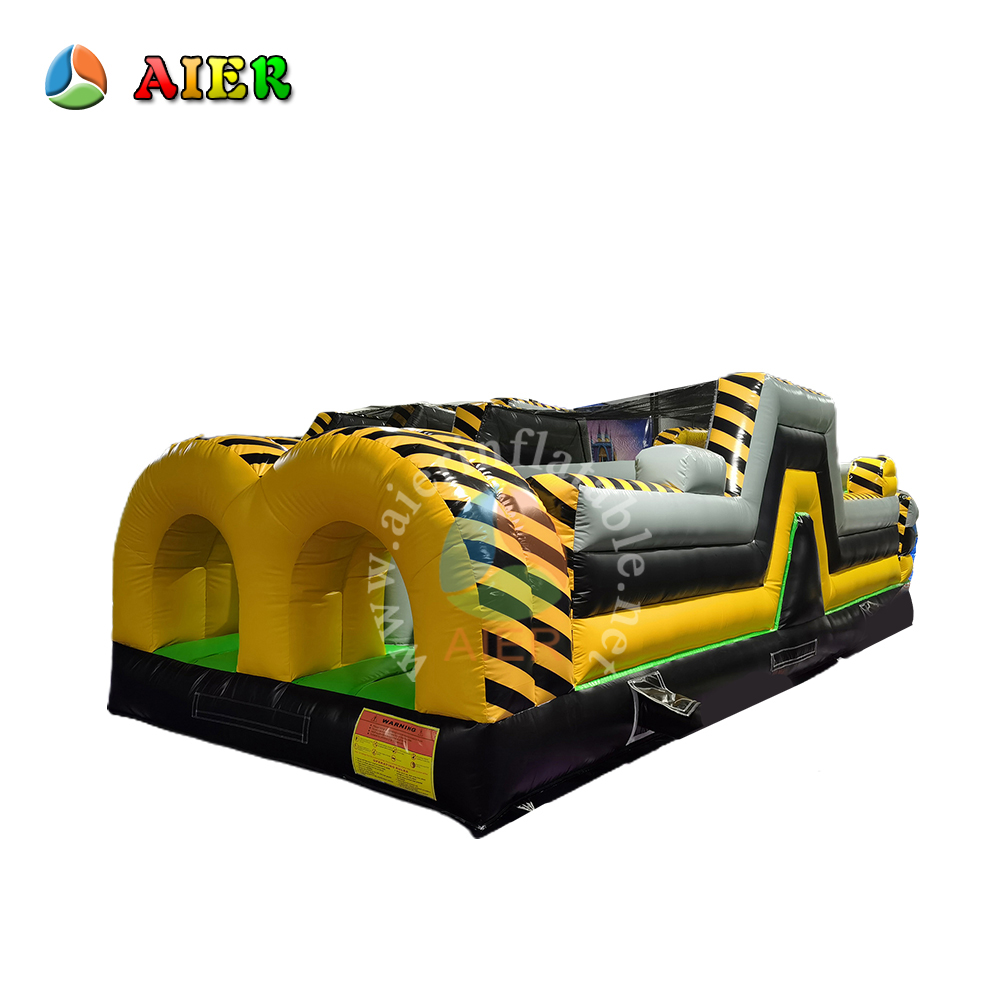
Aligning Inflatable Obstacle Course Design with Outdoor Sports Day Objectives
Designing Age-Suitable Course Layouts and Participant Segmentation for Schools and Community Events
When designing inflatable obstacle courses, it is important that the different elements of the course coincide with the developmental level of the children who will be using them. For children aged 5-7 years, the different elements of the course should include tunnels for them to crawl through and slides that are under 4 feet in height. For children aged 8-12 years, the course should include higher levels of challenge with the addition of 6-foot climbing walls and balance beams. Teenagers and adults are also a challenge with the inclusion of 8-foot hurdles and coordination ropes. Proper participant grouping will ensure that everyone is engaged in the course. Research published in the Youth Sports Safety Journal in 2023 found that play collisions are reduced by 34% when participants are grouped within 2 years of each other in age. Schools that are implementing this kind of activity should also have enough space at the entrance to the course as well as numerous lanes that are parallel to each other so that entire classes can participate at the same time. Community events benefit from modular designs as they can quickly be adjusted to different configurations for relay race formats.
Basic models are great for customers that only need them periodically and for more simple events. Premium models are differentiated because their set up can be done more quickly because of special air interlocking systems and anchors that conform to ASTM safety regulations. The material makes it more resistant to wear from more aggressive surfaces such as concrete. The way they anchor them can also work on slides (up to about 10 degree slopes). Event organizers with large events (500+ attendees) usually invest more initially, but in the long run, they will save more money with the premium options. Repairs are documented to decrease by 23% with premium models in comparison to the basic models.
Outdoor Safety Essentials: Anchoring, Surface Compatibility, and Compliance
Secure Anchoring on Grass, Pavement, and Uneven Terrain Using ASTM-F2374–Certified Systems
Effective anchoring systems should keep equipment safe and secure, without any risk of equipment moving, tipping, or falling during use. ASTM F2374 Compliance should be met for anchoring systems used on any surface. Grass surfaces will require spiral stakes with a flat plate anchor to distribute anchor weight properly. On a concrete and/or asphalt surface, heavy sandbags are suitable to provide weight. However, a concrete block will add additional weight and assurance for stability. When dealing with a non-level surface, they recommend the use of ratchet straps (catch systems) to create a level surface on concrete/ asphalt at an angle of 10 degrees. All of the methods mentioned above are designed to withstand stresses generated by multiple impacts during jump activities. It’s essential to keep children safe during busy sports functions, as they will be active and participating. anchor systems will provide the safety, stability, and compliance needed for children to participate freely and safely.
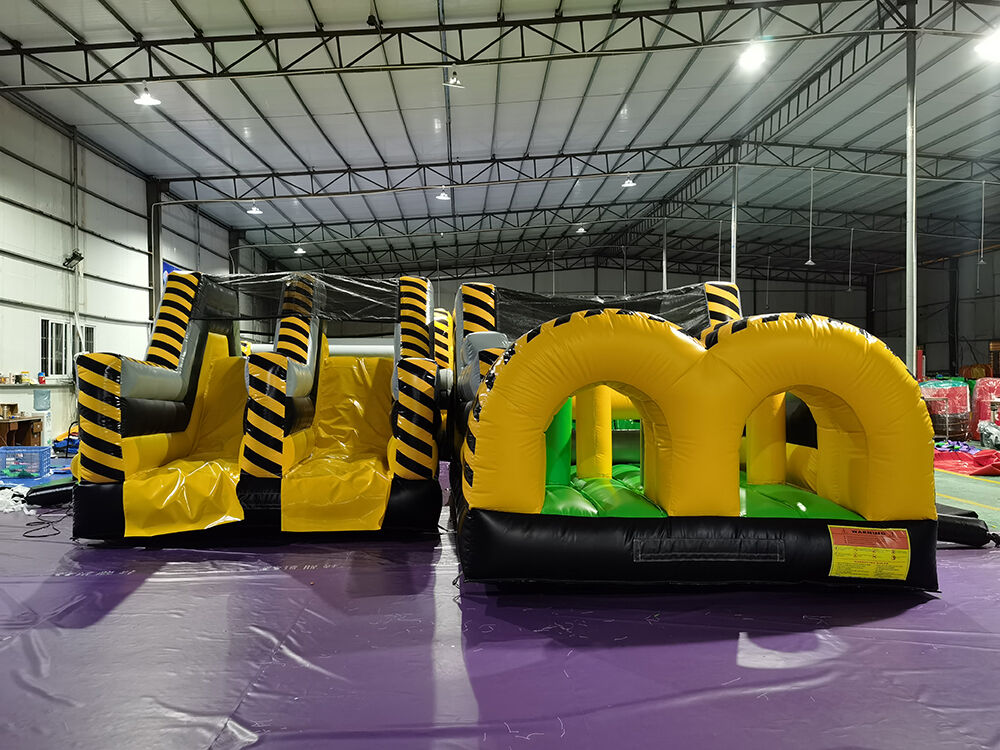
Materials that are Slip-Resistant, Weatherproof, and Supervision Protocols for use outdoors
Thanks to the slip-resistant anti-textured PVC coating, the risk of falling is reduced even when the coating is wet. In some real-world studies, some of these coatings even resulted in as much as a 40% reduction in slip-related incidents. The vinyl used is specially treated so that it doesn't crack when exposed to extreme temperatures, even when it's been sitting out in the sun for extended periods of time. The stitches are also designed to withstand winds in the 25 mph range, and are good for gusts that strong. In terms of running outdoor events, supervisors are required to conduct headcounts to track the number of people in the area at any given time, monitor the separation of adults and children, and conduct safety inspections prior to every event. By including all these elements, maintenance headaches can be avoided as the facilities can remain usable through all seasons and weather conditions.
Weather Resistance and Long Lasting Durability of Commercial Inflatable Obstacle Courses
Wind Resistance, UV- Coated Vinyl, and Rain Ready For Seamless Outdoor Fun
Commercial inflatable obstacle courses must stand up to the elements including the wind. Internal baffles and reinforced anchor points allow bouncers to withstand winds of 25 mph and remain stable. Straps and seams are made from UV stabilized vinyl and the stitching is done with UV resistant thread. These materials are proven to hold vibrant colors over thousands of hours of exposure to direct sunlight. The floors of rain ready inflatables are designed with drainable mesh and antimicrobial stitching to manage The wind stability matters a lot actually. The better quality ones have those internal baffles inside plus stronger anchor points so they can handle winds over 25 miles per hour without flipping over. Most manufacturers use UV stabilized vinyl these days because regular materials just break down too fast when exposed to sun for long periods. These weather resistant upgrades allow businesses to reduce equipment closures for bad weather by up to 70%.
Real-World Field Performance: Maintenance Insights from 3 School Districts with High-Use Programs
Key durability trends from longitudinal studies in the school district databases indicate the following:
Courses with 18+ oz vinyl and double-stitched seams, on average, provided 5+ years of service life, even with daily usage
40% fewer repairs were reported from districts with weekly cleaning protocols
Functional lifespan was increased by 3 years for units with modular components that could be replaced
Drawdown Maintenance, including puncture patching and seam inspections, post adverse weather, proved to be more cost-effective than reactive repairs, achieving a 300% ROI over 5 years for multiple outdoor event occurrences.
Strategies for the Cost-Efficient Deployment of the Setup Time, Transportation, Logistics, and ROI of Outdoor Sports Days
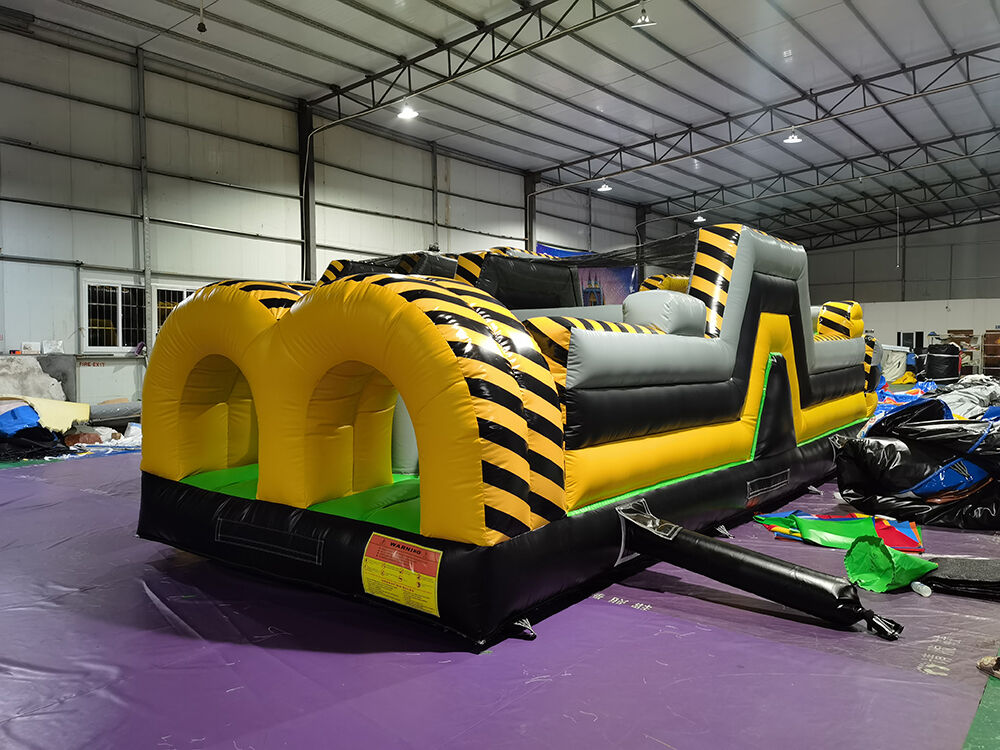
To aid the planning of the frequent outdoor sports days, the rate of the set up of the sports days can make or break the event for the company organizing the event. System(s) that can be set up in less than 30 minutes, using less than 4 people, can reduce the labor costs by 40% as opposed to working with complex sport event setups. Furthermore, these portable and compact systems can be transported in standard flatbed trailers, which eliminates the need for custom, expensive, and oversized transport vehicles. After the first purchase of the systems for schools that that terminate services 4 times a year the price for the rental of this sport event equipment goes down by nearly 75%. Additionally, on weekends, owners of the sports venue can rent the venue out for back to back events as opposed to having the venue sit empty. This means that sports equipment that can be used on the sports days can be rented out to make back the money spent on the sports equipment. In as little as 18 months, venues that host events frequently can expect to make back the money spent on the sports equipment by renting out the sports equipment and by having to pay less staff. Maintenance of equipment is necessary less than 200 setups which is the average that has been observed in visits to check on the equipment. This means that the average event host can expect to save approximately $740,000 for each piece of equipment that is used to host events.
FAQs
What age groups are suitable for inflatable obstacle courses?
Inflatable obstacle courses cater to multiple age groups. For 5 to 7-year-olds, challenges such as crawling tunnels and small slides are appropriate. Balancing beams and climbing walls are great for 8 to 12-year-olds. Teenagers and adults require larger challenges such as higher hurdles and rope swings.
What is the distinction between standard inflatable obstacle courses and premium inflatable obstacle courses?
Standard inflatable obstacle courses are made of 0.45mm PVC and are made for flat grass. This means that the setup time is greater. Premium models are made of 0.55mm reinforced PVC, are quicker to setup, and are made for different types of terrain and are modular, meaning they can be used for various course layouts.
What are inflatable obstacle courses in different types of terrain?
For grass, we use spiral stakes, and flat plates. If you are on concrete or asphalt, we use sandbags. If you are on rough terrain, we can use ratchet straps that are adjustable.
What is the instability of inflatable obstacle courses in different types of weather?
Premium inflatable obstacle courses can handle winds of 25 mph and UV stabilized vinyl. If you are using the courses, you should expect for the course to be functional and not require great upkeep.
How profitable are inflatable obstacle courses when used at multiple recurring events?
When events are recurring, the inflatable obstacle course is a quick set up and the labor costs are greatly reduced. If the event is set up to be used at least 12 times, the venue will be able to cover the costs of the inflatable obstacle course.