EN
EN



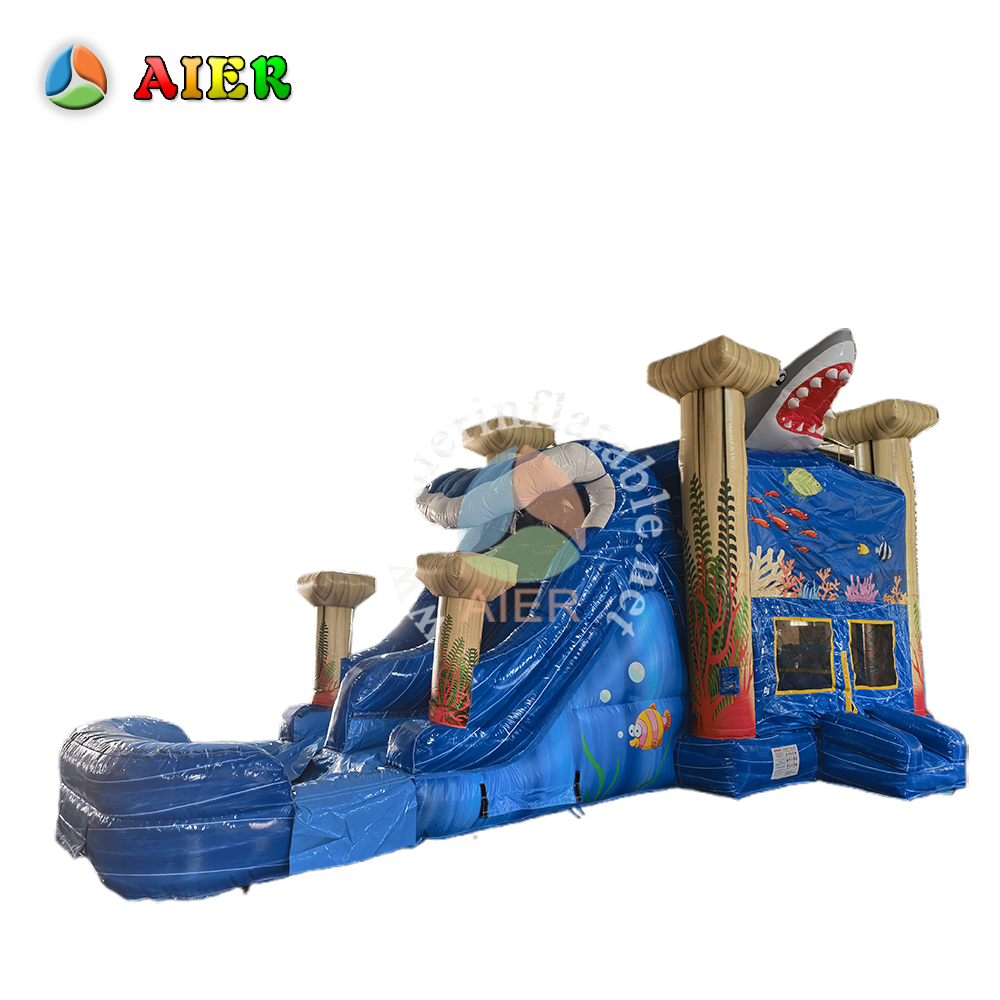
What does weight capacity signify for an inflatable slide?
A weight capacity usually refers to total load, not just the number of participants. The total load that a structure can handle is the safety concern that limits the number of participants on inflatable slide. From a safety standpoint, a manufacturer does a number of calculations to set limits, including the gauge of the material, the strength of the welds, and the holding strength of the anchors, under the stress and strain caused by users. A common mistake on the slide is a considered weighing 70 pounds each for 5 children assuming that a slide giving a weight capacity of 500 pounds is safe. However, once the pressure on a few points on a slide surpasses the considered numbers, the safety design is exceeded, and the stress is great on the welds and seams. Even though three children weighing 210 pounds may not seem a lot on an inflatable slide, a family of four adults may be able to screw the safety numbers by weighing only 400 pounds. The number limits set by the manufacturer do not consider the pressure exerted by moving users and the design safety exceeded due to the increased numbers of users.
Different ways people distribute their weigh while interacting with an inflatable structure determines how an inflatable structure handles floating and deflection.
Those inflatable pages can be strapped with their manufacturer tested weight limits
All inflatable equipment manufacturers must comply with ASTM F2375-22 and EN 14960. These are the international safety standards governing inflatable play and inflatable structure equipment. These safety standards detail the Manufacturers' Validated Weight Capacity Testing.
- Load testing consists of applying 150% of the intended weight limit for a duration of 24 hours. This is done to determine if there has been any seam dis-placement on the inflatable or fabric fatigue in the materials.
- Impact testing consists of a weighted dummy being dropped from the highest point of the structure.
- Wind testing consists of using ground stakes or said ballast to survive a lateral force of 3,000 pound.
After the inflatable slide in question has survived at least 10,000 uses, and maintains the same structural integrity, a 3rd party testing laboratory will give their certification of structural integrity. All these testing are done in order for the manufacturing company to determine how realistic their weight limit is in terms of how people load shifts, temperature changes in PVC materials, and the gradual loss of air in the inflatable structures.Primary Design and Material Considerations Impacting the Weight Capacity of Inflatable Slides
PVC thickness, quality of the welds, and reinforcement spots
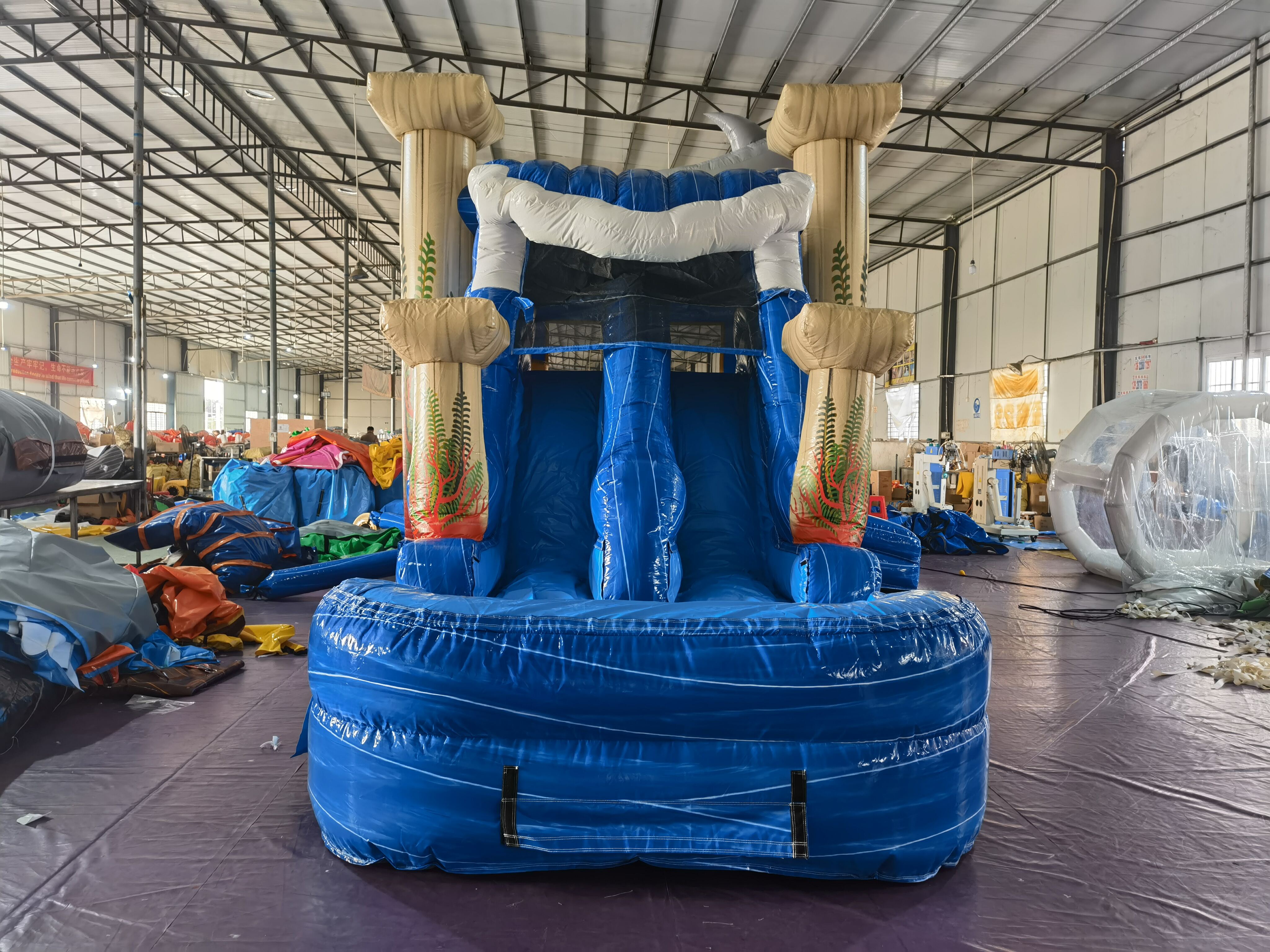
The type of materials used is a major determinant of the maximum safe weight an inflatable can accommodate. Thicker PVC vinyl of at least 0.55 mm is more resistant to punctures and can withstand heavier loads than residential inflatables which sit between 0.35 to 0.45 mm thickness. On the other hand. weld quality is just as important. Manufacturers avert the risk of weld seams parting under stress when they do continuous thermals seams along 15 to 25 mm of seam overlap. In the past year’s Play Safety Journal, poor welds accounted for about 67 % of structurally faulty inflatable welds. Where the stress is expected to be the highest, like landing zones, entry zones, and transition curves, manufacturers reinforce the areas with more than one layer of fabric and internally webbed systems. This reinforcement helps absorb the energy generated by bouncing kids and spread it out evenly through the landing zones.
The weight/stress relationship positions the overall size of the device when measuring the impact of the weight exerted. As slides increase in height and angle, more gravity and lateral force are created, requiring increased and. internal support and bases for further/greater stability. However, longer slides with shallower angles tend to distribute the force more evenly and the impact is less focused. Anchoring is not optional, it is critical for maintaining safety. Secured straps and certified anchor points resist tipping. The Inflatable Safety Council (2023) indicates a tipping risk increase of 80% for slides 4m and over. Edge anchor placement minimizes the rotating/spinning motion caused by multiple sliders. This prevents unforeseen and undesirable positions of the slide.
Residential vs Commercial Inflatable Slides Weight Restrictions
Residential inflatable slides and commercial inflatable slides are made for completely different purposes which is why their weight limits vary so much. Most residential inflatable slides have weight limits of about 200 to 500 pounds. This is perfectly fine for the occasional use of a couple kids playing in the backyard. Commercial inflatable slides, on the other hand, have much higher weight limits because they are used constantly throughout the day by many different people. These slides are made to handle weights of 500 to over 1500 pounds. This is possible because they are made of a much thicker PVC, usually over half a millimeter, as well as extra reinforcement within areas of heavy stress. They also usually have multiple internal air chambers so that if one chamber goes flat, the slide will not collapse. There are a lot of differences between residential and commercial inflatable slides in terms of strength, but one of the most important differences is that commercial inflatable slides are required to meet safety standards and specifications before being manufactured. Slides are tested to determine how many pounds of force are required to separate the seams. 2023 commercial inflatable slides were tested and it was determined that they can withstand 3 to 5 times more pounds of force than residential inflatable slides. This means that for larger groups of people, a residential inflatable slide will not work as well as a commercial inflatable slide.
Considerations such as potential crowd size, audience age diversification, and long usage duration require selecting commercial-grade products to avoid incidents involving seams ripping, unexpected deflation, and possibly tipping the slide over.
Safety Risks and Compliance: The Dangers of Exceeding the Weight Limit of Inflatable Slides
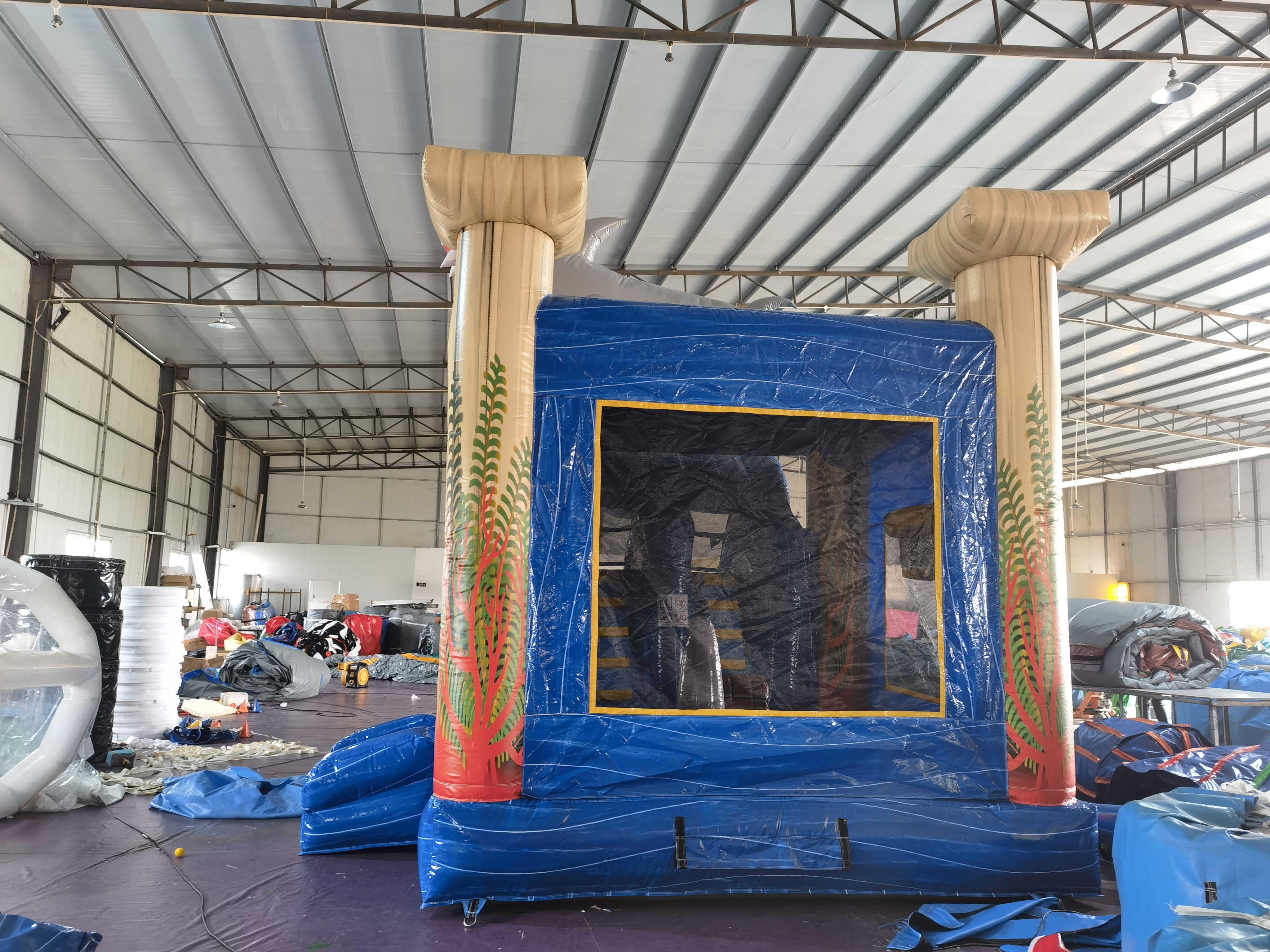
Neglecting the posted weight limit invites avoidable, harmful incidents. Overloading is responsible for 42% of slide incidents (Global Playground Safety Report, 2023), and is a major contributing factor in three different ways:
Common failure modes: Seam separation, deflation, and tipping
Weak seams or defective seams undergo extreme pressure and fail catastrophically as a result of abnormal loading (i.e., collapse, deflation, or tipping). More than just a conjecture, 190 people were hospitalized in 2022 due to collapses from overloading.
ASTM F2375-22 and EN 14960: Compliance and the Safe Use of Inflatable Slides
The safety of inflatable slides is dictated by the ASTM F2375-22 and the EN 14960. Manufacturers have a standard to meet to receive certification, which represents the lowest standard of safety. These include:
Unit subjected to a static load test equal to 150% of the rated capacity. Anchor systems designed to withstand a lateral force of three thousand (3,000) pounds. Units remain stable under 25 mph winds when occupied.
Compliance isn’t a marketing claim. It is a legal requirement that provides protection for users during normal, active use, from structural failure.
What does weight capacity mean for an inflatable slide?
Weight capacity is a function of slide design and engineering, more specifically, material selection, seam construction, and anchor configuration.
Is it safe for adults to use a children's inflatable slide?
Yes, as long as the adult does not exceed the weight limit of the slide. It is unsafe to use the slide if the adult does exceed the weight limit.
Why do residential and commercial slides have different weight limits?
Because residential slides are made to be used less frequently than commercial slides, they are designed for lighter limits; commercial slides are built to withstand heavier use.
What are common causes of inflatable slide failure?
Seam failure, sudden deflation, and tipping due to overload or uneven weight distribution are the most common causes.