EN
EN



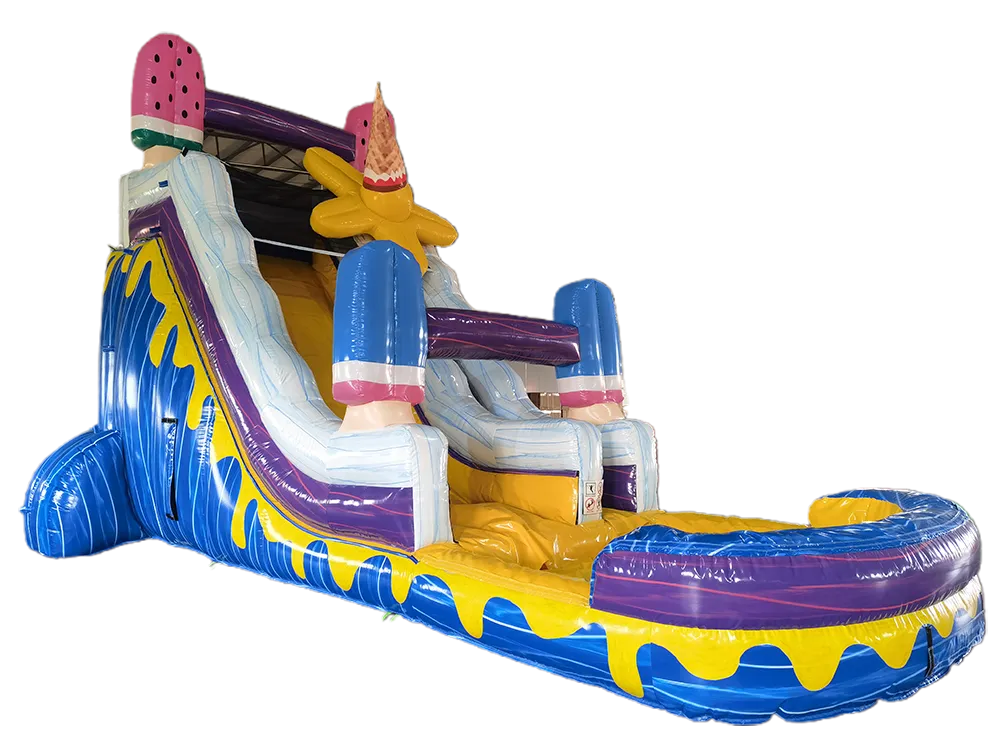
Feasibility of Temporary Inflatable Playground Installation at Festivals
Time, labor, and equipment requirements for quick inflatable playground deployments.
Festivals require careful attention to detail and consideration of many possible factors when it comes to setting up large inflatable playgrounds. Most of the time, set up teams consisting of 2 to 4 people can set up and test more than 4 large inflatable playgrounds. If everything goes perfectly, set up and testing can be done in as little as 1 hour! If no nearby electricity is accessible, then there are 15-20 kW generators, heavy duty blowers, and tough materials such as puncture resistant PVC and TPU, as well as special anchoring systems that can be used for quick and easy anchoring during installations. If done correctly and in the right places, site checks can literally make or break installations. Before installations, large inflatable playground installers should look for as many nearby power sources as possible. They should also look for ground bumps or dips, as well as areas that may have drainage problems. Delays of 30% can be eliminated with the right preparation. They also have to make adjustments in the layout to accommodate for the weather, and to leave time for unexpected additional problems.
Regardless of the circumstances, no one approaches the inflated structures until a detailed safety inspection is performed.
Inflatable playgrounds can be set up on grass, asphalt, concrete, and indoors.
Choosing a surface affects safety, setup, and future maintenance, and grass is typically best because it absorbs shocks and keeps stakes in place. Regardless of the surface, there is a slope limit of 5 degrees to keep the equipment from sliding. Other than grass, special considerations are needed for cushioning on asphalt to reduce wear and tear, and concrete must stay free of cracks for maintenance, which may include evenly distributed sandbags, slip resistant mats, and weeds. For indoor, inflatable setups, check that there are 18 feet of clearance above the play area, and check heating to control moisture. Adhesives or weighted anchors to the floor must be used to secure units and protect against floor damage. Regardless of surface, the setup should be preceded by small hardness-testing by the professionals to ensure safety.
Surface Type Preparation Requirements
Grass Leveling; debris removal Spiral steel stakes (min. 6”)
Asphalt Requires protective underlayment Water weights (50 lbs + per anchor)
Concrete Requires checking for cracks Sandbag arrays + non skid mats
Indoor Requires checking ceiling height Adhesive anchors + floor protection
Securing inflatable playground units across
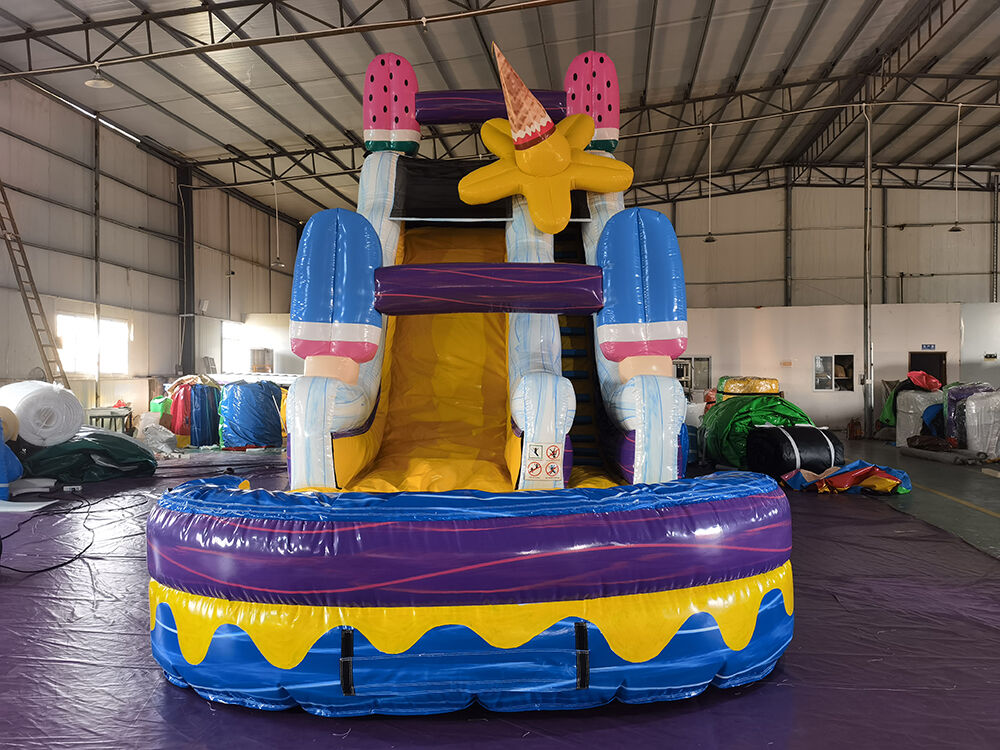
Anchoring best practices by surface type (Stakes, sandbags, water weights, and engineered ballast)
Because anchors are not an optional extra, they are essential to safety, so we will do what we can based on each specific setup. For grass, 6 to 10 spiral anchors (38cm) at 45 degrees will meet your lifting force requirement. ASTM standard (F2374) For mega setups, we ballast everything to ensure everything goes. For grass, at least 500kg per ballast sandbag meets spec. For the interior, we use heavy ballast to meet the floor limits. Prior to installation, we will do the site prep, and then the installation.
Remove any rocks, level out uneven areas, and inspect the slopes to ensure the ground isn’t slippery for inflation or in case the wind picks up. Each anchor is tested for strength, and our goal is over 130 kg of pull resistance, surpassing the ASTM standards. During wind events, we also check the tensions on the inflatables every hour.
Important Safety Message: Inflatables up to 68% of inflatables incidents are related to inflatable anchors. Never replace the recommended screws and bolts, or suggested weights, and do not omit any inspection checklists prior to the event. (U.S. CPSC, 2023)
Safety Protocols for Various Weather Conditions for the Use of Temporary Inflatable Playgrounds
Rain, wind, and temperatures that require the inflatables to be deflated or the playground to be shut down
The rules regarding weather are industry standard, and thus do not allow for flexibility. If winds remain steady above 15mph (24 km/h) we are required to start deflating. If there are gusts above 25mph, inflation operations have to be completely shut down. Rain presents two major issues. The first is that, in the event of a surface becoming wet, falls become much more likely (for example the likelihood of a fall can increase by 40%). The second is that water pooling can cause serious issues with electrics, particularly around the powerful blowers. Staff and kids face the risk of heat exhaustion during elevated temperatures, and it becomes a concern when temperatures exceed 90F (32C). It is also important to note that, for all shut down decisions, there is a requirement for clear and detailed documentation to include the time and a justification for the shut down.
These documents are not just bureaucratic red tape. They are essential for managing insurance claims and passing inspections from regulators.
Live weather monitoring and integrated responses systems used by professional festival operators
The best festival operators leverage multiple automated systems instead of just using manual systems. They set up anemometers and lightning detectors that provide real-time data and communicate with control systems linked to NOAA and other commercial weather systems. Their plans are tiered responses. Wind speeds at 12 mph are briefing winds and anchor checks. At 18 mph, structures are deflated. At 22 mph they must evacuate. Ground teams, safety managers, and stage managers communicate using 2-way radios to allow the safety team to communicate to the crowd about 90 seconds after an event that could cause danger is detected. Crews are required to simulate high winds every 3 months to prepare for deflation of real structures under fake high winds. Comprehensive safety plans used by festival operators have reduced the occurrence of weather incidents by 63% according to the Event Safety Journal.
Regulatory Compliance for Installing Inflatable Playgrounds on a Festival Scale
Obtaining permits, liability insurance, compliance with ASTM F2374, and local jurisdiction considerations
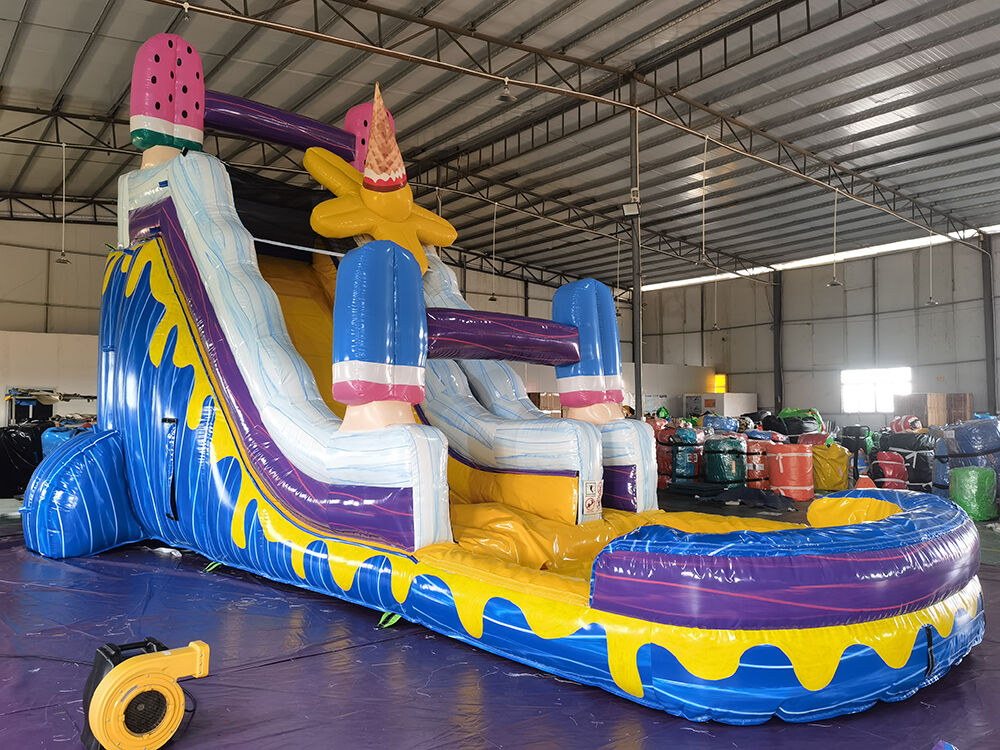
The regulatory process begins long before the first blower can be turned on. First, organizers must obtain temporary use permits from local governments. This involves fire department approvals, crowd movement studies, and plans for exits in case a worst-case scenario occurs. Insurance is a major component of all this. Many venues require a million dollars of insurance coverage for any one incident. Due to this, many insurance companies require proof of compliance with ASTM F2374 before writing a policy. What does this standard require? Compliance with several regulations. Firstly, it mandates that all setups larger than 200 square feet have two separate blowers for redundancy. Secondly, each anchor used to secure the inflatable must be able to support 130 kilograms. Lastly, all emergency deflation tests must be documented and performed regularly.
Local regulations provide significant insight. In California, for example, yearly inspections must be conducted by certified technicians. Florida requires that all coastal locations provide hurricane-proof anchoring tested for winds of 110 mph. New York City’s noise ordinances are so strict that blowers are required to be under 75 decibels within a 50-foot radius. Specific site requirements for contractors, questionable zoning, historic area protections, and private property rights agreements are often overlooked and catch many contractors off guard. Denied permits are attributed to these factors about 66% of the time. To avoid these problems, smart contractors maintain complete digital files and records of all inspections, first aid training records, weather management plans, and all contracts signed by vendors. The penalties for ignoring rules are severe and contractors often pay for these mistakes. In many large cities, violations are charged to contractors at more than five thousand dollars per violation. Without the required ASTM F2374 documentation, insurance will not cover the breach, and all insurance contracts will become null and void. Small problems could escalate and become large issues for contractors.
FAQ
What are the main requirements for installing inflatable playgrounds at festivals?
Main requirements include qualified employees, equipment like heavy-duty blowers and anchoring systems, thorough site checks, and following all procedures, including weather-related safety procedures.
What surfaces can inflatable playgrounds be installed on?
Inflatable playgrounds can be set up on grass, asphalt, concrete, and indoors. Each surface requires different set up, like leveling, protective materials, and indoors, proper ceiling height.
How do inflatable playground professionals ensure safety in regards to the weather?
Real-time weather monitoring equipment such as anemometers and lightning detectors are used to make the proper weather-related safety decisions.
What permits and laws do inflatable playgrounds at festivals need to comply with?
Inflatable playgrounds need to obtain temporary use permits, obtain liability insurance, comply with ASTM F2374 standards, and understand the local area laws, including noise ordinances, and other structural inspections.