EN
EN



Preparing the Site for Optimal Bouncy Castle Inflation
Clear, Level, and Stable Ground
Getting the ground right is extremely important for safely setting up a bouncy castle. Look for ground that is flat and has a pitch of less than 5 degrees. Take the time to sweep the area free of rocks, sticks and other sharp objects within a ten foot radius, Then, as you walk around the area, look for patches of soft soil that could become a problem when kids jump around. Most safety standards have this requirement because uneven ground puts extra strain on the structure and increases the chance of accidents. If you are working on harsh surfaces like concrete pads, and plastic sheets work quite well to protect the surface above and below it, and improve wear and tear on the sheet.
Wind and Anchor Management
If the wind speed is over 15 mph, the bouncy castle could deflate. To minimise the risks, ensure the bouncy castle is parallel to the wind. To keep the structure secure, do the following:
Stakes: In each corner of the structure, ensure that 12-18 inch metal stakes are secured at a 45° angle, below the structure.
Sandbags: If staking cannot be done, weigh each anchor strap down with sandbags ≥40 lbs.
Always check anchor tension prior to inflation. If you see a rope that is slack under load, this is a sign of poor securing, and loose securing is the cause of over 60% of incidents related to wind.
Selecting and Fitting the Right Blower for Your Bouncy Castle
Relating CFM, Wattage, and Voltage to Bouncy Castle Size and Construction
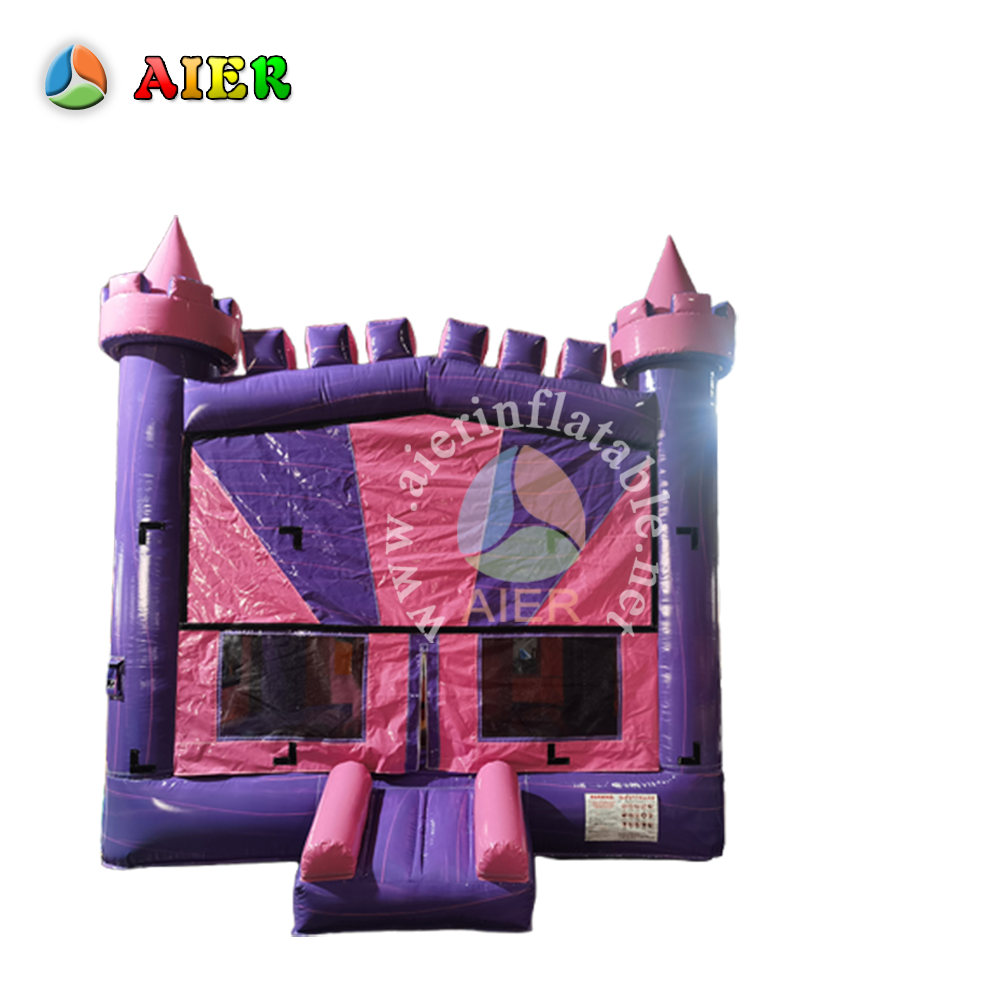
Choosing an appropriate blower for your bounce house means considering CFM, wattage, and voltage. For small backyard setups up to ~12 feet, blowers around 700 – 900 CFM and 110 volt are fine. However, for large 15+ foot commercial units, most people find they want >= 1200 CFM blowers to keep everything taut and standing. Also, check that the motor is the same as the manufacturer's instructions. We have seen the most melt downs by people buying cheap knock offs. A report from last year stated almost 2/3rds of problems with bounce houses stemmed from incorrect wattage rating. If setting up outside, go for the weather resistant 110V/15A models if possible. Most homes won’t have industrial grade 220V wiring, so that type of setup is more of a commercial concern.
When and How to Use Dual Blowlers for Faster Bouncy Castle Inflation
Two blowers can really speed things up by cutting inflation time by 40 to 60 percent for larger structures over 15 feet. Place the other blower 6 to 8 feet from the inflatable's main air intake. Starting them at the same time also helps avoid those annoying pressure spikes that go faster on some parts than others. Try to use the same blowers with the same CFM rating (like two 1,200 CFM models) and plug them into separate grounded outlets to avoid the breakers blowing during use. The extra blower acts as backup also. If one unit is lost, the inflatable will not be completely deflated. For any event, it is a good idea to take some test runs and time how long it takes to get everything inflated. For commercial operations, getting ready in under 90 seconds is becoming the new standard.
Format inflation Process for ease and safety
Inflation Process step-by-step guide and approximate time
For safe inflation, do the following:
a. Position the blower nozzle firmly in the inflation port
b. Ensure that all bystanders are 10 feet away from the inflation area
c. The blower should be set at medium slow speed for the initial 30-45 seconds of unrolling the structure.
d. After a few seconds of no movement, switch the blower to full speed if the fabric seems to have tension.
e. Check to ensure the structure is inflated to the point that all walls are standing at close to 90° vertical.
In a typical 15×15 ft bouncy castle, pressure required to operate the inflatable should be achieved within 3-5 minutes. Larger bouncy castles 20×30 ft and over may take 7-9 minutes. Always take into account the complexity of the design, the specifications of the manufacturer and the inner workings of the inflatable. You may not leave the structure unmonitored at any given point of time during this step.
To do these safety checks, no more than 2 minutes after the structure has been fully inflated to the manufacturer’s specifications, you should
Listen for any air leaks at the seam, the connection points, and anywhere else there may be air coming from the structure.
Feel the fabric for any unexpected and loose air flow.
Look for signs of the fabric sagging, bulging, or any of it being asymmetrical.
Once you are done checking all of these things, and before you let anyone on it, air leaks must be repaired. If not the inflatable’s overall safety will have been compromised up 40% within less than 15 minutes of it being in use. If you suspect there may be a leak, you can check for it by soaping the area, and check for air to be escaping through it. You should see bubbles.
What surfaces are appropriate for setting up bouncy castles?
These are best placed on surfaces that are level and even. Remove any sharp debris and set the bouncy house on surfaces that are neither bumpy or dip. If set on concrete surfaces, a large sheet of plastic must be placed under the bouncy house.
How are bouncy castles anchored in windy conditions?
Metal stakes placed at a 45-degree angle at the tie-down points or use sandbags placed over anchoring straps. Tighten any loose anchors prior to inflating to avoid any issues.
What specifications are required to use a blower for small bouncy castles?
Blowers for small bouncy castles (12 feet or smaller in height) typically require 700-900 CFM and can work with standard 110 volts.
What strategies help to inflate large bouncy castles more quickly?
Using two blowers at a set distance and starting them at the same time will help to maintain a constant air pressure and reduce the time taken to inflate large bouncy castles.
How are leaks found in bouncy castles?
Leaks can be detected up to two minutes after bouncy castles are inflated. Listen, feel and look for air that is escaping, hissing sounds, airflow that is causing some unexpected movement and look for areas of the castle that are saggy or bulging.