EN
EN



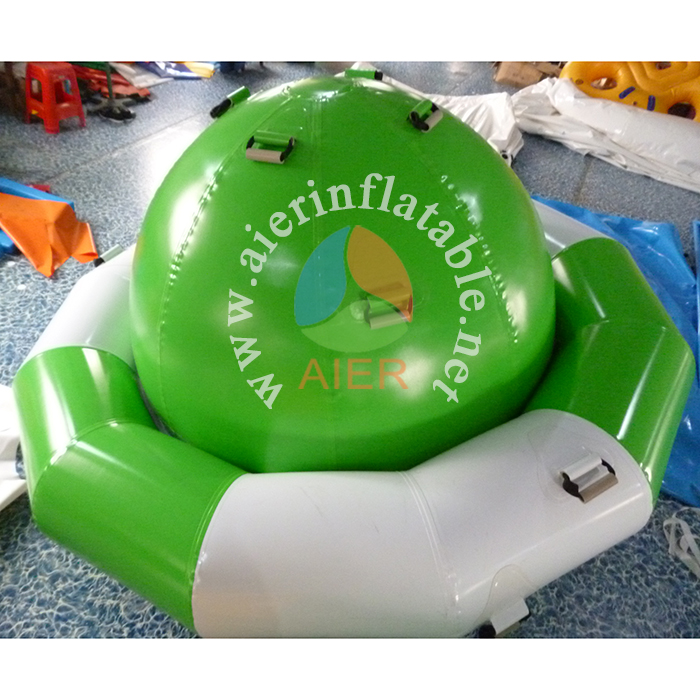
Material Selection: Why Not All Inflatable Water Games Can Compete In Saltwater
Don't Use Standard PVC In Marine Environments
Standard PVC (Polyvinyl Chloride) has a tendency to degrade quite rapidly in saltwater due to hydrolysis and leaching of the plasticizer. Salt ions in the environment damage the molecular chains and cause vigorous breakdown. Research has shown that PVC inflatables can lose tensile strength in sea-water at a rate of up to 3 times that of in freshwater. After just 6 months of being in a coastal environment, the tensile strength can drop by up to 40%, which can lead to cracking at the PVC inflatables seams. Marine organisms pick up faster with PVC, which makes that even worse. Inconsistent saltwater use, PVC has a practically useless lifespan of just 1-2 years, a finding borne by a 2023 marine materials study.
TPU vs. Hypalon: Real-World Saltwater Durability and Hydrolysis Resistance
Hypalon and TPU (Thermoplastic Polyurethane) outperform PVC in most applications found in the marine world. Hypalon has the best UV and chemical stability withstanding 40ºC to 120ºC, the best dimensional stability, and the best hydrolysis resistance; Hypalon retains 40% more saltwater than TPU over 500 hours in the lab. TPU has excellent and unmatched resistance to abrasion (40% greater than Hypalon) and 2 times less water infiltration (makes Hypalon 2 times heavier), with Hypalon having good hydrolysis characteristics. Outside fo PVC, Hypalon and TPU repel biofilm and seam failure due to saltwater better than PVC. This data is verified by GMP associates.
UV and Environmental Performance of Hypalon For Coastal Inflatable Water Games
UV and salt together catalyze and accelerate the rapid degradation of marine coatings and fabrics, which are especially susceptible to UV light. Salt is abrasive and causes chemical changes. For coatings and fabrics, Polyurethane and PVC, the rate of hydrolysis more than triples when salt and UV are present. Ultimately, products in the tropics show visible degradation, including surface powdering, stiffness, splitting, and seam failure, within a single season. Insufficient water games in the tropics are noted to last only half as long as the same water games in freshwater. For performance in the coastal environment, look for Hypalon fabrics and coatings.
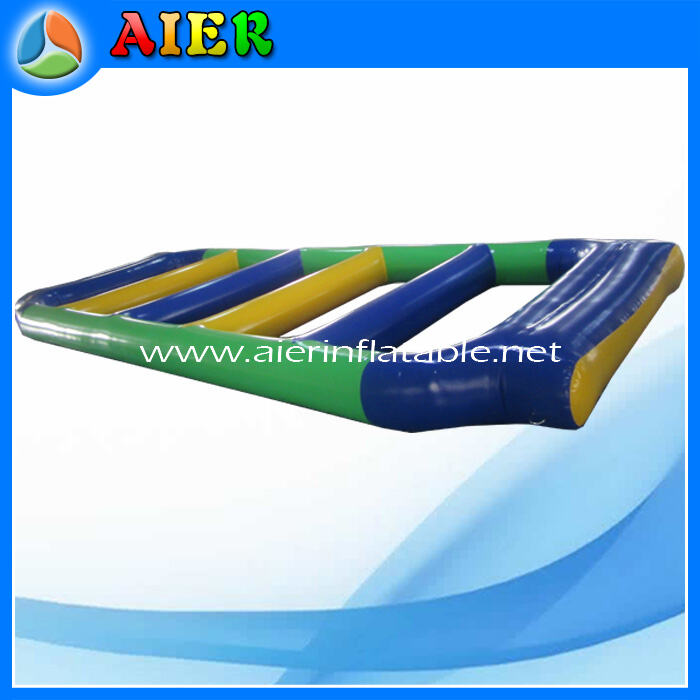
Proper Care to Lengthen the Lifespan of Your Inflatable Water Game in Saltwater
Prevention is Greater than Repair
Salt can be destructive to inflatable water games. Salt break down the products over time. Use this protocol to extend the life of the water games after every use at the beach.
Washing: After every use at the beach flush the inflatable water game with Fresh Water. Be gentle.
Drying: Inflate water products fully in a shaded area. Ensure the product is not damp as moisture promotes fungus.
Storage: Water games should be stored in breathable bags not sealable bags. Be conscious of the temperature as it should not over 28 degrees. The products should not be stored with items that are sharp or can cause damage.
Studies show that if the treatment is followed 90% of the time, the life span of the of inflatable water games In saltwater are extended by 40% compared to other water games.
Certifications, Warranties, and Real-World Validation for Saltwater-Ready Inflatable Water Games
All third-party certification shows aquatic durability. The European Standard for Inflatable Play Equipment, EN 14960, is an industry standard for evaluating major failure points because of. To prove hydrolysis resistant, reputable manufacturers go a step further by completing accelerated aging tests of 500 hours of saltwater exposure/a warranty is a great coverage. Warranties stretch from 3 to over 5 years. Real-world examples can be more valuable than documentation. Multiple cases from rental companies at the saltwater coast provide evidence for seam integrity remaining intact. Many cases from rental companies at saltwater shores provide evidence for seam integrity. Independent lab reports showing ≥85% of tear strength loss after 90 days of being submerged in saltwater shows the resilience. Wave tank testing is another technique leading brands utilize to test the reliability of their anchoring systems in harsh marine conditions.
FAQ
Why is PVC a poor choice for saltwater use?
The deterioration process is accelerated in saltwater for PVC because of the process of hydrolysis and the loss of PVC and other components. Salt also causes pH levels to drop. Saltwater destroys more molecular bonds than other solvents, resulting in they breakdown. Molecular bonds also contribute to rigidity, and the loss of rigidity leads to a loss of lifespan.
What materials are the better choice for inflatable water games for saltwater?
TPU and Hypalon are a more durable and better saltwater resistant and UV resistant material. This is also a more flexible material that can endure more.
What steps can be taken to make for a saltwater inflatable water game a longer lifespan?
Proper rinsing after use and pay real saltwater games. Adequate moisture protection, make sure it is a good seal for the it should be on a breathable container in the most protective way that is the saltwater.
What Marine Grade Inflatable Certifications to Look For?
Marine-grade water games can be evaluated for durability with the EN 14960 certification. This kind of certification examines the strength of the materials, seam integrity, and resistance to UV-related damage.